
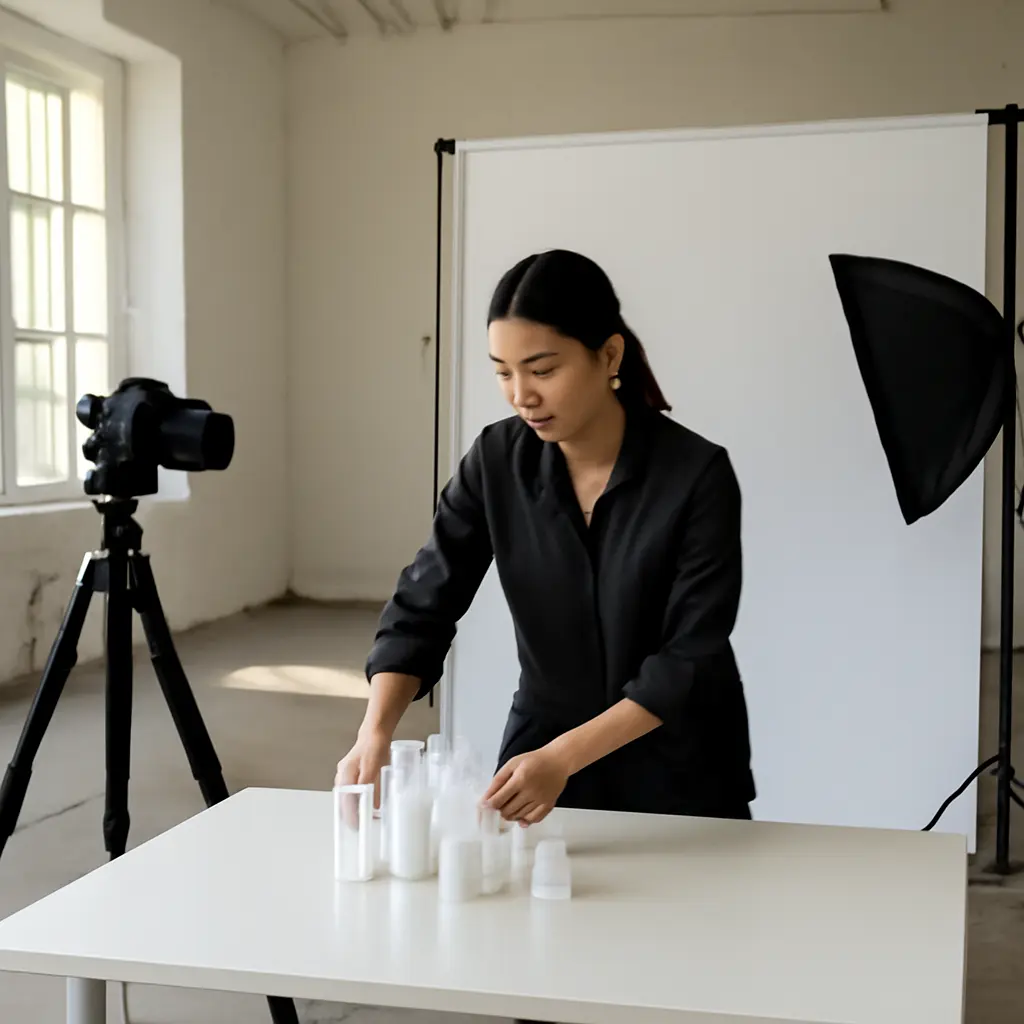
A luxury beauty photo shoot is a coordinated production in which a brand’s creative, photography, makeup, styling, and production teams turn a product and campaign idea into polished images. A typical shoot day moves from set preparation and lighting tests to product and model photography, review, and careful file management. The process matters because images are central to how beauty products are presented across advertising, e-commerce, and social media: the U.S. Bureau of Labor Statistics reports that photographers work in a wide range of commercial settings, while the Federal Trade Commission requires advertising claims—including visual impressions—to be truthful and not misleading. Behind the scenes, that means balancing artistry, product accuracy, efficient collaboration, and compliance.
A luxury beauty photo shoot day: production workflow and creative control
A photo shoot day is the production phase of a larger campaign, not an isolated burst of picture-taking. The American Society of Media Photographers describes commercial photography as work shaped by a client’s brief, intended use, and production requirements. For a beauty campaign, those requirements may include a hero image, close-up product details, model portraits, packaging views, and alternate crops for different platforms.
The luxury context adds a heightened focus on finish and consistency: reflective packaging must read clearly, skin should look polished without appearing deceptive, and colors need to represent the product faithfully. The production team typically includes a photographer, art director, producer, digital technician, hair and makeup artists, stylist, assistants, and client representatives. Roles vary by budget and scope, but clear decision-making is essential because every change to lighting, makeup, or product placement can affect the final image.
The call sheet and pre-production plan
A call sheet is the day’s operational plan: it lists the location, arrival times, contact information, schedule, scene requirements, and other practical details. Before the shoot, the producer and creative team translate the campaign brief into a shot list and visual references. They confirm product quantities, model availability, wardrobe, props, set materials, lighting needs, and image delivery specifications.
Pre-production also helps prevent avoidable delays. The U.S. Bureau of Labor Statistics notes that photographers may work on location or in studios and must manage equipment and technical requirements suited to the assignment. On a beauty set, a preflight check can include testing camera tethering, cleaning packaging, checking backup stock, and confirming that the approved product shade and label are available for each setup.
The creative brief and visual direction
A creative brief defines what the campaign should communicate and who it is intended to reach. It usually connects the product’s positioning to a visual language, such as clinical precision, sensual glamour, or understated refinement. The art director and photographer use that direction to decide how the product, model, lighting, set, and color palette work together.
This is where luxury codes become practical choices rather than abstract adjectives. A “minimal” concept might call for a clean background, controlled reflections, and carefully spaced props; a “radiant” concept might use a larger light source and a warmer tonal range. The team should also agree on which details must remain legible, including shade names, logos, applicators, and packaging features.
The set turns campaign direction into photographs
Once the plan is approved, the shoot moves through a sequence of set builds and camera setups. The central task is to make a product visually compelling while preserving its recognizable shape, finish, and intended appearance. Product still life, model imagery, and texture demonstrations are related but distinct forms of beauty photography, each requiring different decisions about light, focus, scale, and styling.
Lighting, camera tests, and color control
Lighting determines how a product’s surface, color, and texture appear in the image. A photographer may use diffused light to soften shadows, flags to control reflections, or small highlights to define glass and metallic edges. Before the main sequence, the team takes test frames and reviews them on a calibrated or otherwise controlled display so that the art director and client can assess composition and product rendering.
Color management is especially important when a shade is a selling point. The International Color Consortium describes color management as a system for maintaining consistent color interpretation across devices and workflows. In practice, a set may use a color reference, consistent monitor settings, and documented camera or lighting adjustments. These measures reduce avoidable variation, though final appearance can still differ between screens and print materials.
Product still life and packaging photography
Product still life is photography in which the product is arranged without a live model as the main subject. The team checks bottle orientation, label visibility, cap alignment, surface cleanliness, and the relationship between the object and its background. For glossy or transparent packaging, assistants may adjust reflectors and flags repeatedly to create clean edges without distracting glare.
A useful real-world reference is the product image standard used in online retail: images must make the item recognizable and show the details a shopper needs to evaluate it. The U.S. Federal Trade Commission’s advertising guidance also makes clear that an advertisement can mislead through its overall impression, not only through explicit wording. Accordingly, retouching should not alter a product’s material features or create a visual effect that falsely suggests performance, size, or contents.
Model, makeup, and texture shots
Model photography places the product in use or presents a face as the campaign’s emotional focus. Makeup artists refine the look between frames, while the photographer directs expression, pose, and product interaction. Texture shots—such as a cream swatch, lipstick application, or serum drop—show sensory qualities and can bridge the gap between a product pack image and a full campaign portrait.
The team must distinguish visual styling from substantiated product claims. The FTC’s Guides Concerning the Use of Endorsements and Testimonials in Advertising require that endorsements reflect honest experience and that material connections be disclosed where applicable. More broadly, brands should ensure that campaign imagery and accompanying copy do not imply unsupported results. This is particularly relevant when skin is retouched or when a model’s appearance is used to suggest a product outcome.
On-set review, retouching, and delivery
The final phase of the shoot day is a controlled review and handoff. The digital technician or photographer organizes the captures, checks focus and exposure, and presents selected frames for feedback. This does not replace post-production: it helps the team identify missing shots, technical problems, or a needed variation while the set and talent are still available.
Tethered capture and image selection
Tethered capture connects the camera to a computer so images can be reviewed soon after exposure. The art director and client can compare framing, expression, product visibility, and consistency across a sequence. A shot list or capture log helps identify which required assets have been completed and which still need attention.
Digital preservation is another practical concern. The Library of Congress’s digital preservation guidance emphasizes maintaining copies and documenting files so that digital materials remain accessible. On a commercial set, teams commonly use redundant storage and organized folders, with responsibilities and backup procedures agreed in advance. The exact workflow depends on the production, but a single unverified copy is a needless risk.
Retouching, accuracy, and final asset delivery
Retouching is the post-production process of correcting or refining image details, including dust, stray hairs, small blemishes, and background inconsistencies. The approved retouching brief should distinguish cleanup from changes that could distort the product or the model’s appearance. Teams may create different crops and file versions for print, web, and social channels, but each version should preserve the campaign’s approved visual and factual meaning.
Before delivery, the producer or client team checks filenames, dimensions, color space, usage rights, and required formats. The U.S. Copyright Office explains that copyright ownership and licensing govern how creative works may be used; in commercial photography, the parties should establish permissions and usage terms rather than assume that payment alone settles every right. Model releases, photographer agreements, and any applicable music, location, or prop permissions also belong in the production record.
Why the behind-the-scenes process matters
The shoot day is where brand strategy becomes a set of concrete visual choices. A strong process helps the team maintain consistency across product still life, model portraits, and digital formats while reducing reshoots and protecting the credibility of the campaign. It also makes room for creative experimentation without losing sight of accuracy, safety, permissions, or delivery needs.
For readers planning a shoot, the most useful next steps are to build a precise brief, assign one clear approval lead, prepare a shot list, confirm product and talent permissions, and establish backup and retouching standards before the camera begins. These small decisions make the work more efficient and help ensure that luxury presentation rests on reliable production rather than polish alone.
Conclusion: a photo shoot day combines craft, coordination, and trust
A luxury beauty photo shoot day brings together pre-production planning, visual direction, lighting and product styling, model and texture photography, on-set review, and post-production safeguards. Each stage contributes to images that feel distinctive while accurately representing the product. The broader lesson is that premium imagery depends not only on aesthetics but also on careful collaboration, truthful presentation, secure file handling, and clear usage rights. To explore the process further, consult professional photography production guidance and the FTC’s advertising resources before developing a campaign.
Sources: U.S. Bureau of Labor Statistics, Photographers, Occupational Outlook Handbook, https://www.bls.gov/ooh/media-and-communication/photographers.htm; American Society of Media Photographers, Best Business Practices, https://asmp.org/resources/best-business-practices/; Federal Trade Commission, Advertising and Marketing Basics, https://www.ftc.gov/business-guidance/advertising-marketing; Federal Trade Commission, Guides Concerning the Use of Endorsements and Testimonials in Advertising, https://www.ftc.gov/legal-library/browse/rules/guides-concerning-use-endorsements-testimonials-advertising; International Color Consortium, About the ICC, https://www.color.org/abouticc.xalter; Library of Congress, Digital Preservation, https://www.loc.gov/preservation/digital/; U.S. Copyright Office, Copyright Basics, https://www.copyright.gov/circs/circ01.pdf