
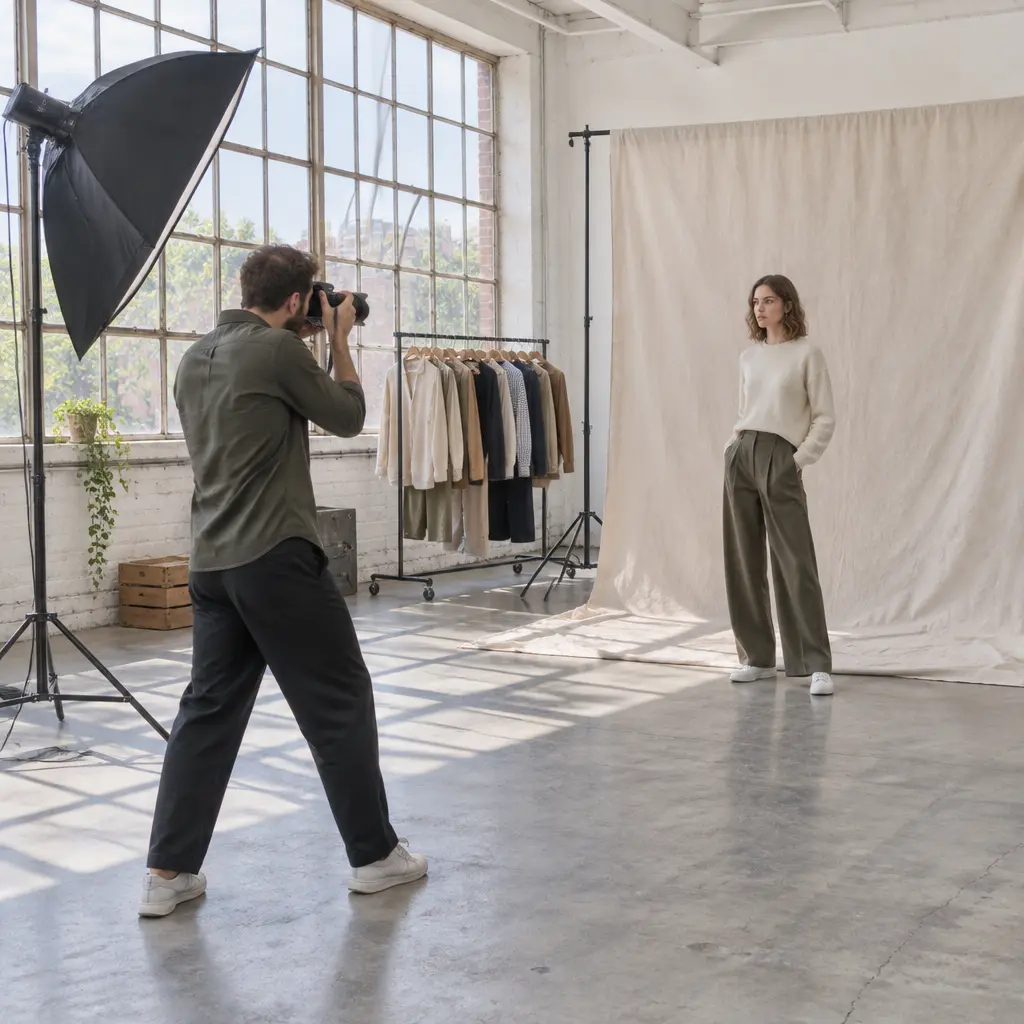
A great fashion photograph is an intentionally constructed image that makes clothing, a person, and an idea compelling at the same time. Its success depends not on expensive equipment alone, but on a clear visual concept, purposeful lighting and composition, effective styling, and a sensitive relationship with the subject. The history of fashion photography, the practical choices photographers make, and the ways images are judged today all show why technical skill matters most when it serves a memorable point of view.
Creates a Distinctive Visual Idea in Fashion Photography
Fashion photography is photography made to communicate clothing, accessories, beauty, or style, usually for editorial, advertising, catalog, or personal work. The Museum of Modern Art’s collection and scholarship treat it as both image-making and a record of changing visual culture; in practice, that means a successful fashion photograph must present garments clearly while giving the viewer a reason to look beyond them. Its central attribute is visual intention: the picture should feel as though its choices belong together.
Fashion images appear in distinct forms, including editorial stories, commercial campaigns, e-commerce product images, and street-style photography. They have different goals: a catalog photograph prioritizes accurate product information, while an editorial may use ambiguity or narrative to create mood. Across these forms, a strong image makes its purpose legible without reducing the photograph to a mere record of clothing.
Concept and narrative
A concept is the guiding idea that connects the model, clothes, setting, gesture, and frame. It may be a story, a visual metaphor, or a simple contrast—such as formal tailoring in an ordinary setting. The concept becomes effective when details reinforce it rather than compete for attention. In a fashion story, for example, repeated colors or locations can create continuity across separate photographs, much as a sequence of scenes builds a narrative in film.
Composition and visual hierarchy
Composition is the arrangement of people, garments, objects, and negative space within the frame. Visual hierarchy determines what the viewer notices first and what they discover afterward. A strong pose or silhouette can lead the eye to a garment detail; a clean background can keep attention on fabric and shape. Cropping, symmetry, perspective, and the placement of the subject all influence whether the image feels calm, confrontational, intimate, or dynamic.
This hierarchy should reflect the photograph’s purpose. A close crop may reveal embroidery or texture, while a full-length frame communicates proportion and styling. The next essential choice—how light describes those forms—turns the composition into a particular atmosphere.
Uses Light, Color, and Technique to Shape Fashion Photographs
Lighting is the deliberate control of illumination, shadow, and contrast to reveal a subject and establish mood. In fashion photography, it must often do two jobs: make clothing legible and give the image character. The American photographer Ansel Adams described photographic craft through the relationship between visualization and technique; although his work was not primarily fashion photography, the principle applies here: technical decisions are strongest when they realize an intended image.
Lighting and texture
Hard light produces defined shadows and can emphasize structure, while soft light creates gradual transitions that often flatter skin and delicate materials. Side lighting can reveal the weave of fabric or the contours of a garment; front lighting can reduce shadows and present color more evenly. Neither approach is universally better. The right choice depends on whether the image should feel sculptural, polished, dramatic, or natural.
A photographer can shape light with window placement, reflectors, diffusion, or flash modifiers. These tools matter because black satin, pale chiffon, and textured knit respond differently to the same illumination. Careful exposure and color management preserve those distinctions instead of flattening them into a generic look.
Color, styling, and setting
Color links clothing to background, makeup, props, and atmosphere. A limited palette can make a photograph feel cohesive, while deliberate color contrast can separate a garment from its surroundings. Styling—the selection and arrangement of clothes, accessories, hair, and makeup—also determines whether the image communicates a coherent identity. The setting should support that identity: an architectural interior may stress precision, while an open landscape can make a look feel expansive or unrestrained.
These elements should work together rather than simply appear fashionable. A useful test is to ask whether removing a prop, changing the background, or shifting the palette would weaken the image’s central idea. If not, that element may be decorative clutter rather than meaningful design.
Camera choices and post-production
Lens choice, shutter speed, aperture, focus, and camera position influence perspective and motion. A wide-angle lens used close to a subject can exaggerate proportions; a longer lens from farther away tends to compress distance. Selective focus can isolate a garment detail, while a deeper focus range can describe a complete outfit and environment. These choices are expressive, not just technical.
Post-production includes color correction, retouching, and adjustments to contrast or cropping. It can refine an image, but it should not erase the qualities that make the clothing or person believable. The American Society of Media Photographers’ ethical guidance emphasizes honesty in visual representation; that concern is especially relevant when retouching changes bodies, product color, or material appearance in ways that could mislead viewers.
Builds Connection Through the Subject and Fashion Context
A fashion photograph is not only an arrangement of garments; it is also a representation of a person. The subject’s expression, movement, and agency shape how viewers interpret the clothes. A technically polished frame can still feel empty if the model appears disconnected from the scene or treated as a mannequin. Collaboration helps turn posing into performance and makes the image more specific.
Pose, gesture, and expression
Pose is the body’s arrangement, while gesture is the smaller movement that gives it life—a hand adjusting a cuff, a turn of the head, or a shift in weight. Expression adds emotional direction. The best choices suit the concept and the garment: a structured coat may benefit from a strong, angular stance, whereas flowing fabric may call for movement. Photographers can encourage natural gestures by giving clear, collaborative direction instead of relying on a succession of arbitrary poses.
Representation, consent, and authenticity
Representation concerns who is shown and how people are portrayed. Casting, styling, posing, and retouching all communicate ideas about beauty, identity, age, and belonging. The United Nations Educational, Scientific and Cultural Organization has documented the cultural and economic importance of creative industries, including fashion and photography; the broader implication is that images help shape public ideas, not just sell products. Thoughtful production therefore involves informed consent, respectful collaboration, and care in how bodies and identities are presented.
Authenticity does not require documentary realism. It means that the image’s visual choices feel credible within its own world and do not rely on careless stereotypes or deceptive product depiction. That responsibility connects artistic decisions to the practical question of where and how the photograph will be seen.
Adapts Fashion Photographs to Purpose, Audience, and Platform
A photograph’s success depends partly on its context. An editorial image may be judged for originality and narrative coherence; a campaign image must express a brand identity; a product image must help shoppers assess an item. The same photograph may perform differently across a magazine spread, a storefront, and a small mobile screen, so framing and detail should anticipate the intended use.
Editorial and campaign imagery
Editorial fashion photography typically uses a sequence of images to explore a theme, designer, or cultural idea. Campaign photography is more directly associated with a brand or product and often needs consistent styling across multiple formats. In both cases, distinctive visual choices help images stand out, but clarity remains essential: viewers should be able to understand the intended mood or product without the image losing its individuality.
E-commerce and practical product communication
E-commerce photography prioritizes accurate color, fit, construction, and detail. A clean background and consistent lighting may be more useful than dramatic shadows, particularly when shoppers need to compare products. The U.S. Census Bureau reported that U.S. retail e-commerce sales reached an estimated $1.192 trillion in 2024, representing 16.1 percent of total retail sales. This scale helps explain why clear online product images matter: they are part of how consumers evaluate fashion before purchase.
A practical visual check is to review the image at its actual display size, not only on a large editing monitor. Details that look obvious on a desktop may disappear in a thumbnail, while excessive retouching may make a garment appear different from the item delivered. A simple chart comparing editorial, campaign, and e-commerce priorities could show how narrative, brand consistency, and product accuracy receive different emphasis.
Conclusion: What Makes a Fashion Photograph Great
A great fashion photograph unites a distinctive idea with purposeful composition, expressive light, coherent styling, and a meaningful relationship with its subject. Its technical choices support rather than replace its point of view, and its approach fits the image’s context—whether editorial, campaign, or e-commerce. Because fashion images influence both commerce and cultural representation, excellence also includes accuracy, respect, and awareness of how people are portrayed.
For further study, compare editorial and product images of the same garment, noting how lighting, framing, and pose change what the viewer understands. Then plan a small shoot around one clear concept and evaluate each frame for purpose, clarity, and emotional impact. The strongest photograph is not necessarily the most elaborate; it is the one whose choices make its subject and idea unforgettable.
Sources: The Museum of Modern Art, Fashion Photography: The Story in 100 Photographs, https://www.moma.org/calendar/exhibitions/1653; Ansel Adams, The Camera, Little, Brown and Company, 1980; American Society of Media Photographers, ASMP Code of Ethics, https://www.asmp.org/professional-development/business-financial-resources/code-of-ethics/; United Nations Educational, Scientific and Cultural Organization, Re|Shaping Policies for Creativity: Addressing Culture as a Global Public Good, 2022, https://www.unesco.org/creativity/en/2022-global-report; U.S. Census Bureau, Quarterly Retail E-Commerce Sales, Fourth Quarter 2024, https://www.census.gov/retail/mrts/www/data/pdf/ec_current.pdf.